
BCAA and the liver and kidneys: is it safe
BCAAs — leucine, isoleucine, and valine — are among the most popular supplements in the gym. Do they harm the liver, since «amino acids overload the liver», and the kidneys, since «protein destroys the kidneys»? Interestingly, in liver cirrhosis BCAAs are even used as therapeutic nutrition. The editorial team explains where this difference comes from and where the real limits of safety lie.
The special metabolic pathway of BCAAs
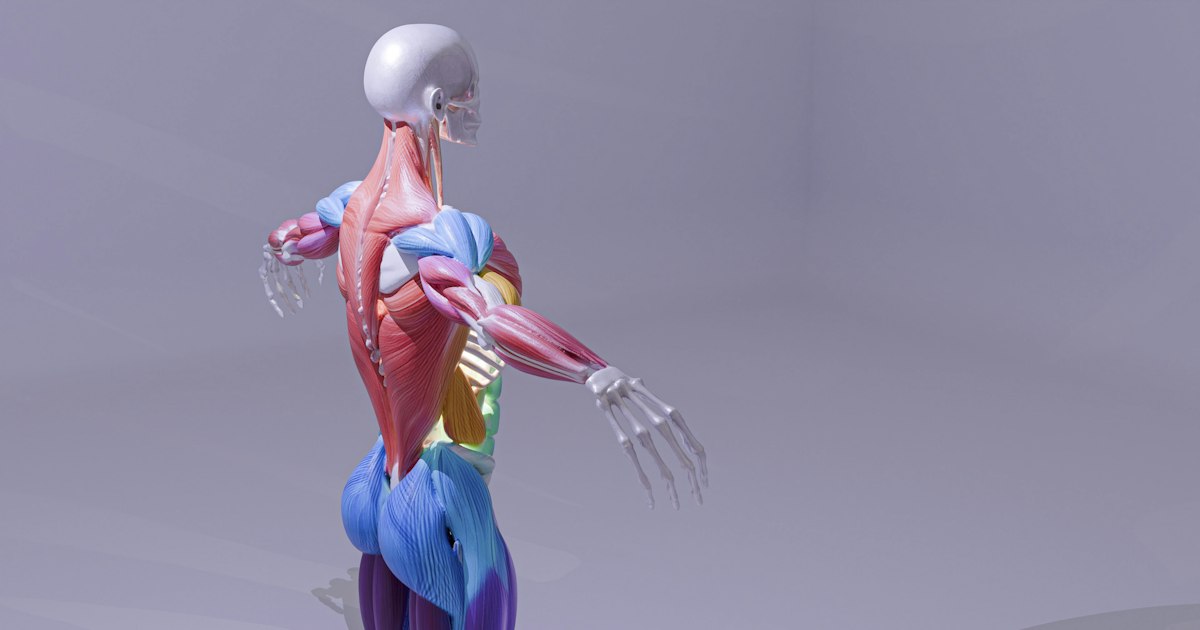
Most amino acids, after absorption, reach the liver through the portal vein, which «intercepts» a significant portion of them. BCAAs are an exception. The liver has low activity of the enzyme BCAT (branched-chain amino acid transaminase), so leucine, isoleucine, and valine largely pass through it and enter the general circulation.
The main site of their conversion is skeletal muscle, where BCAT activity is high. There the BCAAs donate an amino group and are converted into keto acids, which are partly oxidized for energy and partly returned to the liver for further processing. The key enzyme of the next stage — the BCKDH complex — is, by contrast, more active in the liver.
This «distributed» scheme means that the load from BCAAs does not fall entirely on the liver. The ammonia formed during transamination is partly bound by muscle in the form of glutamine and alanine, which are then carried to the liver and kidneys for disposal.
It is precisely because of this muscle metabolism that BCAAs are of interest to hepatologists: when the liver is damaged, muscle takes on part of the work of detoxifying ammonia. At the same time, this same feature explains why, with loss of muscle mass in patients with cirrhosis, the level of BCAAs in the blood declines.
- The liver:lets most BCAAs pass through, processes keto acids, and synthesizes urea from nitrogen.
- The muscles:the main site of BCAA transamination and oxidation.
- The kidneys:excrete urea and take part in the metabolism of glutamine and ammonia.
BCAAs in liver disease: therapeutic use
In patients with cirrhosis, the ratio of BCAAs to aromatic amino acids (tyrosine, phenylalanine) in the blood decreases — this is the so-called Fischer ratio. The hypothesis about the role of this imbalance in hepatic encephalopathy became the basis for developing special BCAA-enriched formulas.
The Cochrane review by Gluud and colleagues (2017) showed that BCAAs have a favorable effect on the manifestations of hepatic encephalopathy, though without a proven effect on mortality. The Japanese randomized study by Muto and colleagues (2005) demonstrated that long-term intake of BCAA granules is associated with better «event-free» survival in patients with decompensated cirrhosis.
The ESPEN guideline on clinical nutrition in liver disease (Plauth et al., 2019) allows oral BCAA supplements for selected patients with cirrhosis, especially those with protein intolerance or encephalopathy, and also as a late-evening snack to improve protein balance.
Thus, in the medical context BCAAs not only do no harm to the liver but are used to support patients with severe damage. However, this does not mean that for a healthy person they «treat» the liver: a protective effect in healthy people is not proven, and in patients the doses and forms are determined by a hepatologist.
The kidneys and the nitrogen load
Any amino acids, after oxidation, leave nitrogen behind, which the liver converts into urea and the kidneys excrete. The classic «hyperfiltration hypothesis» of Brenner and colleagues (1982) held that a protein load increases glomerular filtration and over time may accelerate the progression of kidney disease.
For people with healthy kidneys the data are reassuring. The meta-analysis by Devries and colleagues (2018) in the Journal of Nutrition found no differences in changes in kidney function between healthy adults who consumed more or less protein. The daily dose of BCAAs itself (usually 5–15 g) is a small fraction of the total protein in an athlete's diet.
A different situation is chronic kidney disease. The KDOQI guideline on nutrition in CKD (2020) recommends that patients in stages 3–5 without dialysis restrict protein under a doctor's supervision, sometimes with the addition of keto-analogues of amino acids. Taking BCAAs on one's own in such patients adds nitrogen and may conflict with the prescribed diet.
It is also important that most athletes who take BCAAs already get enough protein from food. Wolfe (2017) noted that isolated BCAAs do not provide all the essential amino acids for full muscle protein synthesis, so the «extra» nitrogen is often simply oxidized and excreted, providing no benefit.
When BCAAs can be harmful
There are rare but important conditions in which BCAAs are contraindicated. The best known is maple syrup urine disease (leucinosis), a hereditary defect of the BCKDH enzyme in which BCAAs and their keto acids accumulate and damage the brain. Such patients follow a strict BCAA-restricted diet from birth.
Another signal from research history is amyotrophic lateral sclerosis (ALS). A clinical trial by an Italian group (1993) using high doses of BCAAs in ALS was stopped because of excess mortality in the BCAA group. This does not apply to healthy people, but it shows that a «natural» substance is not automatically safe for everyone.
The metabolomic study by Newgard and colleagues (2009) linked elevated blood BCAA levels with insulin resistance in people with obesity. This is an association, not proven causation, and it does not directly concern the liver or kidneys, but people with metabolic syndrome should be aware of it.
| Condition | Position on BCAAs |
|---|---|
| Healthy liver and kidneys | At usual doses there are no signals of harm |
| Cirrhosis, hepatic encephalopathy | May be prescribed by a doctor as therapeutic nutrition |
| CKD stages 3–5 without dialysis | Only with a nephrologist's approval because of protein control |
| Maple syrup urine disease | Contraindicated |
| ALS | Not recommended in light of the trial results |
Practical advice and tests
For a healthy person the most important thing is not to turn BCAAs into a substitute for complete protein. If total protein intake is already sufficient, extra BCAAs add almost nothing to muscle growth. The ISSN position on protein (Jäger et al., 2017) emphasizes the priority of the total amount of protein and the full set of essential amino acids.
If you take BCAAs, the usual servings in studies are 5–10 g per dose. There is no need to exceed these amounts: the excess is simply oxidized, increasing urea production.
When monitoring tests, keep in mind that a high-protein diet may slightly raise blood urea, and high muscle mass may raise creatinine. This does not mean kidney disease. For an accurate assessment a doctor may order cystatin C and a urine albumin test.
Liver panels in athletes should be taken after 48–72 hours of rest from heavy training. ALT and AST are also present in muscle, so after intense exertion they may be elevated without any liver damage.
- Choose products with independent certification to avoid contaminants.
- For any kidney or liver disease, coordinate intake with a doctor.
- Do not combine BCAAs with «fat-burning» complexes without understanding their composition.
Editorial conclusions
BCAAs have a special metabolic pathway — mainly in muscle rather than the liver. For healthy people at usual doses there are no signals of harm to the liver or kidneys, and in patients with cirrhosis BCAAs are even used as therapeutic nutrition.
Caution is needed in chronic kidney disease, where total protein is monitored, and in rare conditions — maple syrup urine disease and ALS.
The main practical question is not safety but appropriateness: with sufficient protein in the diet, BCAAs add little.
We also recommend reading our materials comparing BCAAs and EAAs, on protein and the kidneys in athletes, and on leucine as a trigger of muscle protein synthesis.
References
- Plauth M, Bernal W, Dasarathy S, et al. ESPEN guideline on clinical nutrition in liver disease. Clin Nutr. 2019;38(2):485–521.
- Gluud LL, Dam G, Les I, et al. Branched-chain amino acids for people with hepatic encephalopathy. Cochrane Database Syst Rev. 2017;5:CD001939.
- Muto Y, Sato S, Watanabe A, et al. Effects of oral branched-chain amino acid granules on event-free survival in patients with liver cirrhosis. Clin Gastroenterol Hepatol. 2005;3(7):705–713.
- Devries MC, Sithamparapillai A, Brimble KS, et al. Changes in kidney function do not differ between healthy adults consuming higher- compared with lower- or normal-protein diets: a systematic review and meta-analysis. J Nutr. 2018;148(11):1760–1775.
- Ikizler TA, Burrowes JD, Byham-Gray LD, et al. KDOQI clinical practice guideline for nutrition in CKD: 2020 update. Am J Kidney Dis. 2020;76(3 Suppl 1):S1–S107.
- Wolfe RR. Branched-chain amino acids and muscle protein synthesis in humans: myth or reality? J Int Soc Sports Nutr. 2017;14:30.
- Newgard CB, An J, Bain JR, et al. A branched-chain amino acid-related metabolic signature that differentiates obese and lean humans and contributes to insulin resistance. Cell Metab. 2009;9(4):311–326.
- Brenner BM, Meyer TW, Hostetter TH. Dietary protein intake and the progressive nature of kidney disease. N Engl J Med. 1982;307(11):652–659.
Andriy Melnyk
A strength-sports coach and author of programs for beginner and intermediate levels. Writes about training planning.